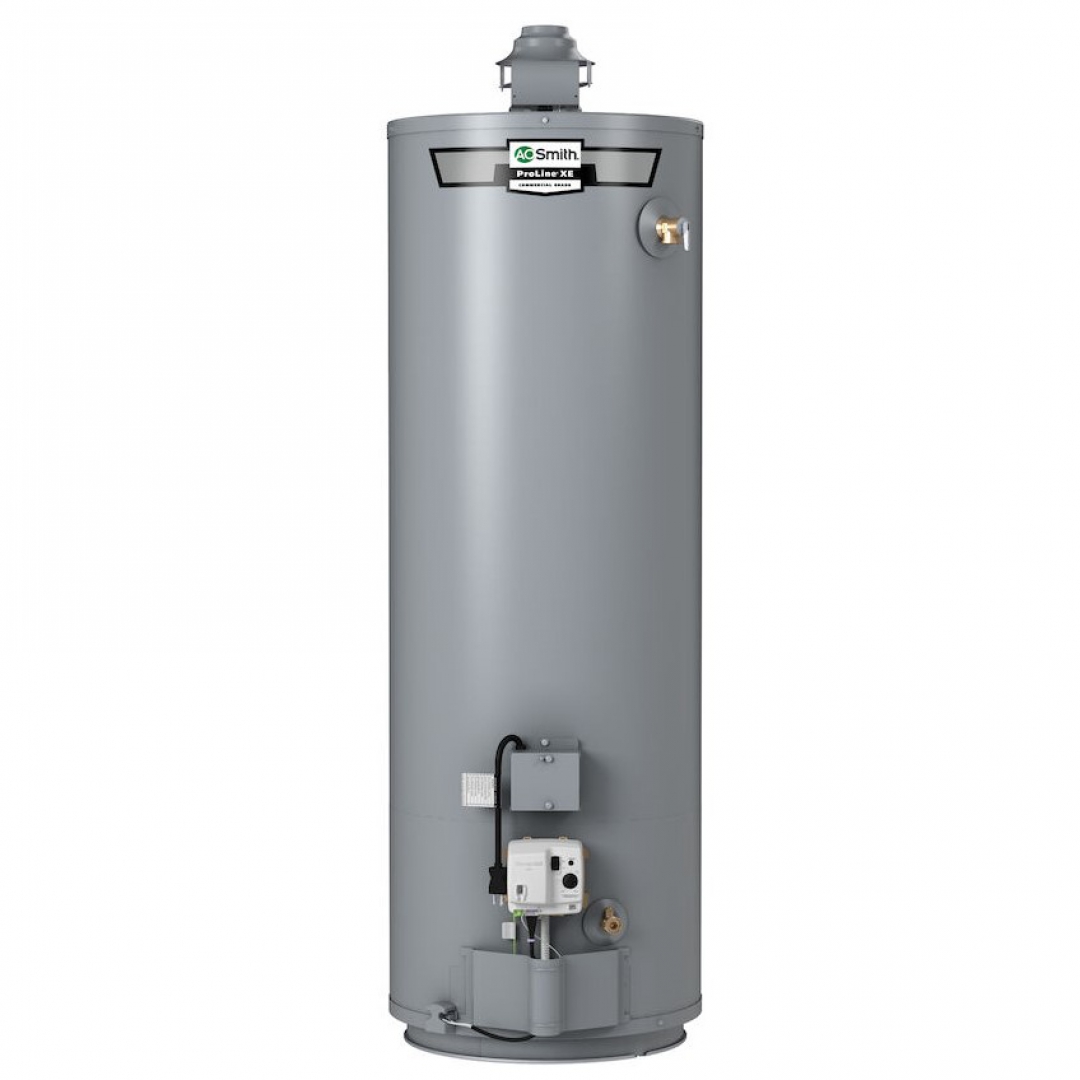
A.O. Smith Signature Tall 6-Year Natural Gas Water Heater: An Informed Choice
Selecting a water heater transcends a simple purchase; it’s a strategic decision impacting long-term operational costs, comfort, and potential property value. This analysis will guide you through evaluating the A.O. Smith Signature Tall 6-Year Limited Natural Gas Water Heater, focusing on its return on investment (ROI), business implications, and a balanced risk/benefit perspective for both individual homeowners and larger-scale property managers.
Evaluating the Investment: ROI and Total Cost of Ownership
Considering the A.O. Smith Signature Tall 6-Year Limited Natural Gas Water Heater, a Total Cost of Ownership (TCO) approach is paramount. The “6-year limited” warranty provides a baseline for expected functional life, safeguarding against premature failure of core components. Its energy efficiency, typically measured by Uniform Energy Factor (UEF), directly impacts monthly utility bills. Natural gas units often boast lower operational costs than electric counterparts in many regions, offering significant long-term savings, especially with high demand. Calculating ROI involves comparing initial outlay (purchase, installation) against accumulated savings from efficiency and avoided repairs over the unit’s anticipated lifespan. For homeowners, this means reliable hot water and predictable operating expenses. For large-scale property management, standardizing on such units simplifies maintenance and ensures consistent tenant satisfaction, directly influencing property value and lease retention rates. The investment extends beyond the purchase price; it’s about sustained performance and fiscal prudence.
Strategic Integration and Operational Impact
Integrating this water heater into any system, from a single home to a small business, requires strategic foresight regarding its operational footprint. The A.O. Smith’s natural gas operation delivers consistent, high-BTU heating, resulting in faster recovery rates than many electric alternatives. This is critical for households with high demand or businesses needing continuous hot water. For homeowners, uninterrupted hot water enhances daily comfort. In larger contexts, such as an apartment building, quick recovery minimizes tenant complaints and supports operational efficiency. The “Tall” dimensions require careful assessment for compatibility with existing spaces and infrastructure, influencing installation costs. Decision-makers must evaluate the unit’s performance alongside plumbing infrastructure, ventilation, and local energy codes to ensure seamless integration and optimal, long-term operation without unforeseen system overhauls.

Risk Mitigation and Performance Assurance
The “6-year limited” warranty is a core aspect of this model’s risk profile. While standard for many mid-range units, understanding its scope is vital: it typically covers parts, not labor, and only specific failures under normal operating conditions. The primary risk mitigated is premature manufacturing defect failure within this period, protecting the initial investment. However, decision-makers must consider potential issues post-warranty. Proactive maintenance, like annual tank flushing, significantly extends operational life, reducing long-term replacement frequency. Selecting a reputable brand like A.O. Smith, even with a standard warranty, often implies better quality control and easier access to spare parts, minimizing downtime. For large-scale operations, using consistent units simplifies spare parts inventory and familiarizes maintenance staff, further reducing operational risk and enhancing response times. This strategic approach ensures sustained utility and minimizes unforeseen disruptions.
Decision Frameworks for Optimized Procurement
An informed procurement decision requires a robust framework, transcending simple price comparison. The A.O. Smith unit should undergo a lifecycle cost analysis (LCA), accounting for capital expenditure (CapEx), ongoing operational expenditures (OpEx) including energy and maintenance, and future replacement costs, all discounted over a relevant timeframe. For homeowners, this aligns with expected home tenure; for property managers, asset depreciation cycles. Qualitative factors like brand reputation and reliability are also crucial. A reputable brand mitigates “soft costs” of inconvenience and tenant dissatisfaction, impacting business continuity. Scenario planning, e.g., fluctuating energy prices or increased demand, helps stress-test the decision. Ultimately, the choice must align with strategic objectives, whether maximizing immediate cash flow, minimizing long-term TCO, or ensuring consistent service quality.
| Feature/Metric | A.O. Smith Signature Tall (6-Year Limited) | Budget Option (4-Year Limited) | Premium Option (10-Year Limited) |
|---|---|---|---|
| Initial Cost (Est.) | Medium ($500-$800) | Low ($350-$600) | High ($800-$1200+) |
| Warranty (Tank/Parts) | 6 Years Limited | 4 Years Limited | 10 Years Limited |
| Expected Lifespan (w/ maintenance) | 8-12 Years | 6-10 Years | 12-15+ Years |
| Energy Factor (UEF) | 0.60 – 0.64 (Typical) | 0.58 – 0.62 | 0.65 – 0.70+ (Often higher efficiency) |
| Recovery Rate (GPH @ 90°F Rise) | ~40-50 GPH | ~35-45 GPH | ~50-60+ GPH |
| ROI Perspective | Balanced value; good mid-range efficiency and warranty for cost. | Lower upfront; higher risk of earlier replacement/repair. | Higher upfront; lower long-term TCO potential, longer reliability. |
“The true cost of any asset is never just its purchase price. Factor in energy consumption, maintenance, and the probability of replacement to understand its full lifecycle impact on your bottom line.” – Dr. Eleanor Vance, Asset Management Strategist
“Reliability in infrastructure components like a water heater isn’t just about avoiding a breakdown; it’s about preserving continuity, customer satisfaction, and the long-term value of your property. Skimping upfront can lead to disproportionately higher costs down the line.” – Marcus Thorne, Facilities Operations Consultant
What does ‘6-year limited’ warranty truly mean for my investment?
The “6-year limited” warranty on the A.O. Smith Signature Tall water heater typically covers the tank and certain internal components against manufacturing defects for six years from the date of installation. It’s crucial to understand that “limited” often means it does not cover labor costs for replacement or repair, nor does it cover failures due to improper installation, neglect, or hard water conditions. For your investment, this means you are protected against a premature, manufacturer-faulted breakdown, but you should budget for potential labor costs if a warranty claim arises, and ensure proper installation and maintenance to uphold the warranty terms.
How does natural gas efficiency compare to other options for ROI?
Natural gas water heaters generally offer a strong ROI, particularly when compared to electric resistance models, due to the typically lower cost of natural gas per BTU in many regions and their faster recovery rates. While tankless natural gas heaters can offer higher efficiency, their initial cost is significantly greater. The A.O. Smith tank model balances moderate initial cost with efficient operation, often providing a quicker payback period through lower utility bills than comparable electric tank models. However, ROI is highly regional, depending on local energy prices, demand, and specific unit efficiency (UEF rating). It’s vital to compare the unit’s UEF against local energy costs to project actual savings.
Is this unit suitable for commercial or multi-unit residential applications?
While the A.O. Smith Signature Tall 6-Year Limited Natural Gas Water Heater is primarily designed for residential use, it can be suitable for certain small-scale commercial or multi-unit residential applications depending on the demand profile. For a single-family home or a small office, its capacity and recovery rate are often sufficient. For larger multi-unit buildings or businesses with high, continuous hot water needs (e.g., laundromats, restaurants), a single residential-grade unit may be undersized, leading to premature wear and insufficient supply. In such scenarios, a commercial-grade water heater, or a system of multiple residential units operating in parallel (a ‘manifolded’ system) with appropriate sizing and redundancy planning, would typically offer better performance, durability, and a more robust ROI over the long term. Always consult a plumbing professional for precise sizing requirements for non-standard residential applications.