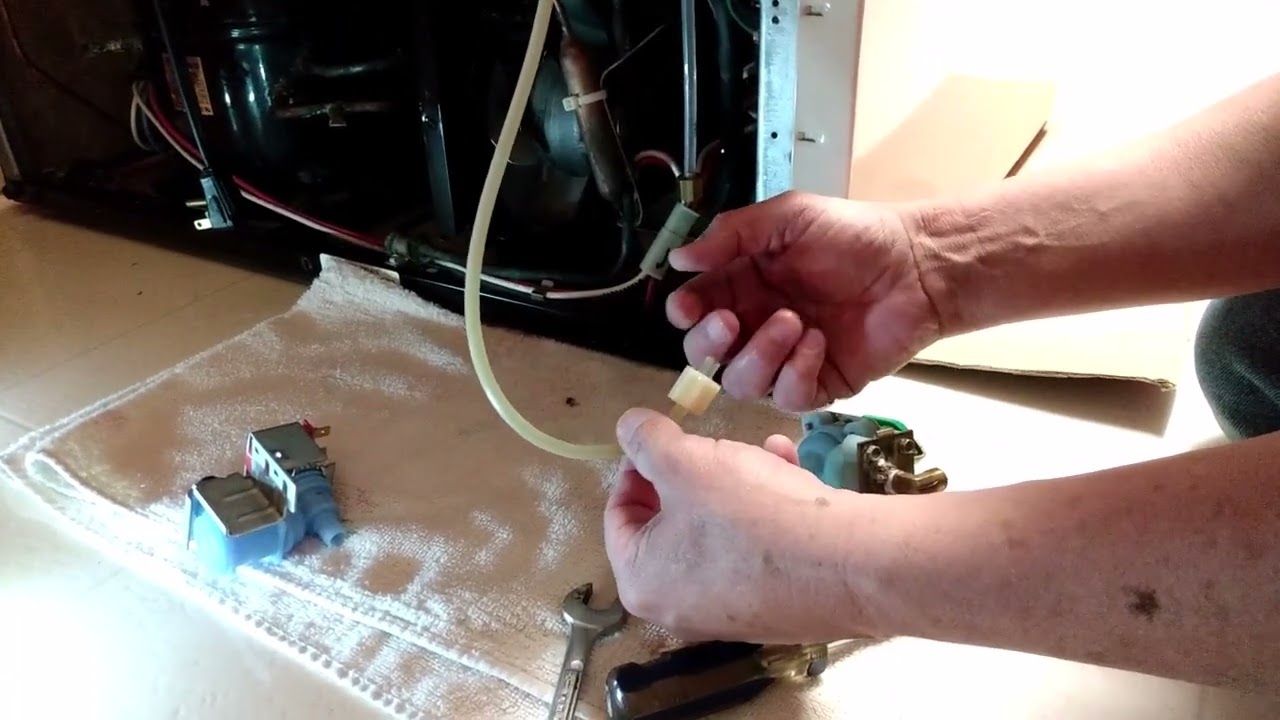
Strategic Appliance Management: Replacing Your Kenmore Refrigerator Water Dispenser Valve (Part 59502993)
Navigating home appliance maintenance requires a strategic approach, balancing immediate cost, long-term asset value, and potential operational disruptions. This guide frames the replacement of a Kenmore refrigerator water dispenser valve (part 59502993) not merely as a repair task, but as a critical decision point involving financial prudence, risk assessment, and resource allocation.
Understanding the implications of a failing valve, from minor inconveniences to significant water damage, necessitates an informed decision-making process. We’ll explore the strategic rationale behind DIY versus professional intervention, the tactical execution steps, and the broader impact on your appliance’s lifecycle and household budget.
Strategic Rationale: ROI and Decision Frameworks for Valve Replacement
When faced with a malfunctioning water dispenser valve, the initial decision isn’t whether to fix it, but rather how and why. This immediately brings ROI (Return on Investment) into focus. The cost of a new Kenmore water valve 59502993 typically ranges from $40-$80, a relatively small investment compared to the potential costs of a professional repair, which can easily exceed $150-$250, factoring in labor and service call fees. For a household budget, a DIY approach can yield significant immediate savings, translating directly into a higher ROI on your time investment.

Beyond immediate cost, consider the impact of inaction. A leaking valve can cause slow, insidious water damage to your flooring, cabinetry, and even subfloor, leading to repair costs that dwarf the valve replacement itself. A faulty valve might also lead to inconsistent water dispensing, reduced ice production, or complete operational failure, diminishing the utility and convenience of a core kitchen appliance. From a strategic asset management perspective, proactively addressing minor failures like a faulty water valve extends the operational life of the entire refrigerator, delaying the much larger capital expenditure of a full appliance replacement. This decision framework emphasizes preventative maintenance and timely intervention as key strategies for maximizing asset longevity and minimizing unforeseen expenditures.
Moreover, the decision to undertake a DIY repair builds valuable household operational expertise. While seemingly minor, successfully completing such a task empowers homeowners with a greater understanding of their appliances and a reduction in reliance on external service providers for common issues. This self-sufficiency has an intangible but real long-term benefit, fostering a proactive maintenance culture within the household. However, it’s crucial to honestly assess your own mechanical aptitude and comfort level, as an improperly executed repair can exacerbate problems or create new ones, turning a potential saving into a costly mistake.
Risk Mitigation and Tactical Execution: The DIY Approach
Executing the valve replacement, while a DIY task, benefits immensely from a structured, risk-mitigated approach. The primary risks involve potential water damage, electrical shock, and incorrect reassembly leading to further operational issues. Each step must be approached with precision, much like a tactical operation where every move is calculated. Begin by absolutely ensuring power is disconnected from the refrigerator and the main water supply line to the unit is shut off. This eliminates the two most significant immediate hazards.
Gathering the correct tools (screwdriver sets, pliers, perhaps a nut driver, and a small bucket/towel for residual water) before starting is a non-negotiable step in risk mitigation. Having the replacement Kenmore part 59502993 readily available ensures continuity and prevents mid-task delays. When accessing the valve, typically located behind a panel at the lower rear of the refrigerator, proceed carefully to avoid damaging surrounding components, such as other water lines or electrical wiring. Photographing connections before disconnection serves as an invaluable reference during reassembly, reducing the risk of miswiring or misplacing hoses.
The actual replacement involves disconnecting the existing water lines and electrical harness, then unmounting the old valve and mounting the new one. Ensure all connections are secure, especially the water lines, to prevent leaks. Use thread seal tape if appropriate for threaded connections, though many modern water valves use compression fittings that rely on tight seals. After installation, before fully pushing the refrigerator back into place, restore water supply and power cautiously. Check thoroughly for leaks at all connection points of the new valve for several minutes. This ‘pre-deployment’ check is critical for identifying and correcting any issues before they become larger problems, embodying a crucial principle of operational quality control. Only after confirming leak-free operation should the refrigerator be fully repositioned and put back into normal service.
Fact: A study by the Insurance Information Institute found that water damage is one of the most common homeowners insurance claims, with the average claim costing thousands of dollars. Faulty appliance components like water valves are significant contributors.
Key Insight: Proactive and precise DIY repairs, especially on water-bearing components, serve as a potent form of preventative risk management against potentially catastrophic financial losses from water damage.
Evaluating Long-Term Impact and Asset Management
This repair extends beyond the immediate fix; it’s an exercise in long-term asset management. By successfully replacing the water valve, you’ve not only restored functionality but also potentially added several years to your Kenmore refrigerator’s useful life. This decision to repair, rather than replace the entire appliance, represents a significant saving in capital expenditure and minimizes environmental impact by extending the life of existing goods. The cost per year of ownership decreases with each successful, cost-effective repair.
Furthermore, consider the strategic advantage of maintaining a well-functioning appliance for critical household operations. Consistent access to filtered water and ice contributes to daily convenience and health, reducing reliance on bottled water and associated costs. From a holistic household operational perspective, this small repair reinforces the principle that minor, timely interventions prevent major systemic failures. Documenting the repair, including the part number and date, creates a valuable service record for your appliance. This record can be instrumental for future troubleshooting, assessing repair frequency, and making informed decisions about eventual replacement cycles. It transforms individual repairs into data points for a comprehensive home asset management strategy, guiding future investments and maintenance priorities.
Finally, the lessons learned from this specific repair can be applied to other home maintenance tasks. The systematic approach to diagnosis, part sourcing, risk assessment, and meticulous execution forms a transferable skill set. This enhances the overall resilience and self-sufficiency of the household, contributing to a broader strategic objective of efficient and economical home management. It’s an investment in both your appliance and your practical capabilities.
Fact: The average lifespan of a modern refrigerator is 10-13 years. Timely and cost-effective component repairs can often extend this lifespan by 20-30%, significantly deferring the need for a major appliance investment.
Key Insight: Strategic repair decisions like replacing a water valve not only save immediate costs but are crucial in optimizing the total cost of ownership and maximizing the utility of valuable home assets over their full lifecycle.
FAQ
What are the primary indicators that my Kenmore water valve needs replacement?
Key indicators include a lack of water dispensing, slow or intermittent water flow, a continuous dripping sound from the valve area, or visible leaks at the rear of the refrigerator. If your ice maker isn’t producing ice, or producing very little, the water valve is a common culprit. A constant humming sound from the valve even when not in use can also signal an internal malfunction that warrants attention.
Is DIY replacement always the most cost-effective option for this specific valve?
While DIY replacement typically offers superior ROI due to savings on labor, it’s not universally the most cost-effective. If you lack the necessary tools, are uncomfortable with basic electrical or plumbing work, or have time constraints, a professional might be a better option. The risk of causing further damage or incurring costly water leaks due to improper installation can quickly negate any initial savings. Always weigh your skill level against potential professional costs and the value of your time.
What are the immediate and long-term risks if I defer this repair?
Immediately, a faulty water valve can lead to water leaks, posing risks of electrical short circuits, water damage to your flooring and cabinetry, and potential mold growth. Long-term, deferring the repair diminishes the utility of your refrigerator, as you lose access to basic functions like water and ice dispensing. This can also put undue strain on other refrigerator components if the valve is causing back pressure or continuous cycling, potentially leading to more extensive and costly repairs or premature appliance failure. From an asset management perspective, deferral degrades the overall value and operational reliability of the appliance.